
Is a Chimney Liner Necessary?
Often, yes: a chimney liner is necessary when your appliance’s venting design requires one or the existing flue cannot safely carry exhaust. An inspection can show whether repair, replacement, or another next step fits; same-day service is available.
Need help now? (240) 433-5089
When Is a Chimney Liner Necessary for Your Fireplace?
A liner is the inner passage that carries smoke and combustion gases through the chimney. It also separates those hot gases from the surrounding masonry or chimney structure. Your fireplace or heating appliance’s instructions and the condition of the existing flue determine whether a liner is needed and what kind will work.
A liner is often necessary when a flue has no liner, when its existing liner is cracked or deteriorated, or when an appliance change means the old passage no longer suits the new system. A liner that is too large, too small, or damaged can affect how exhaust moves and may expose nearby materials to heat or combustion gases.
The answer is not simply “all chimneys need a new liner.” An intact, correctly sized liner may be suitable to keep using; damage or a change in appliance may call for a professional assessment before the fireplace is used again.
Which Chimney Liner Clues Should You Take Seriously?
These observations can point to a flue or venting problem, but they do not confirm the condition of the full liner. Do not climb onto the roof or reach into the flue to investigate.
- Cracks or pieces of liner — If you can see cracked flue tiles or fragments from the fireplace opening without reaching inside, stop using the appliance and arrange an inspection. Visible damage can signal additional deterioration farther up the chimney.
- Smoke entering the room — Smoke that spills into the living area can have several causes, including a venting or draft problem. Stop using the fireplace until a chimney professional checks the flue and appliance.
- A changed appliance or fuel — A new fireplace or heating appliance may have different venting requirements from the one it replaced. Have the flue evaluated before connecting or using the new equipment.
- Evidence of a chimney fire or severe weather — A fire or damaging weather can affect the liner even when the outside of the chimney looks unchanged. Ask for an inspection before lighting another fire.
Which Liner Option Fits Your Chimney’s Condition?
The right choice depends on the liner’s condition, the chimney structure, and the appliance it serves. An inspection helps distinguish a liner that can remain in service from one that needs work.
Keep the existing liner
This may fit when an inspection finds the liner intact and appropriate for the appliance. Ask the chimney professional to identify what was checked and whether any visible concerns remain.
Repair the liner
A repair may be considered when the damage and liner type make a safe, suitable repair possible. The inspection needs to establish the extent of the damage first; a surface-level view may not show the full condition.
Install or replace a liner
Installation or replacement may fit when a liner is missing, damaged beyond repair, or unsuitable for the appliance. The proposed liner should be selected for the appliance and flue rather than chosen by appearance alone.
Need help now? (240) 433-5089
What Should Happen Before a Chimney Liner Is Installed?
You can gather useful information without opening the chimney or attempting work inside it. The inspection and installation itself belong to a chimney professional.
- Identify the appliance — Write down whether it is a fireplace, wood stove, or another appliance, along with the fuel it uses. The appliance label or manual may provide the model and venting requirements; do not remove panels to find them.
- Note changes and symptoms — Record when smoke spillage, unusual odors, or a change in fireplace performance began. Note any recent appliance change, chimney fire, or storm damage so the inspector knows what to evaluate.
- Check what you can see safely — Look from the fireplace opening without reaching into the flue. Note visible cracks, missing pieces, or debris, but do not scrape, pry, or try to assess the upper chimney yourself.
- Gather past inspection records — Share earlier reports, repair details, and appliance paperwork with the chimney professional. These records can show what liner or flue work has already been done.
- Have the chimney inspected — Ask the inspector to assess the liner’s condition and its relationship to the appliance. A masonry-chimney Level 2 inspection procedure calls for a video scan; review the CSIA Level 2 inspection procedure for when this inspection level is recommended.
- Compare the findings with the appliance requirements — Ask how the observed liner condition and dimensions relate to the appliance’s venting instructions. The proposed choice should account for both the appliance and the chimney, not just the visible opening.
- Review the proposed work — Before authorizing installation, ask what liner work is proposed and which findings support it. Confirm what the work covers and what the installer will check after the liner is in place.
- Keep the report and follow-up guidance — Save the inspection findings and any installation details with your appliance records. Use the professional’s findings to decide whether the fireplace is ready to use or needs further work.
What Can Go Wrong With a Damaged or Poorly Matched Liner?
A damaged liner can leave heat, smoke, or combustion gases with a compromised route through the chimney. A liner that does not suit the appliance may also interfere with exhaust flow. These are reasons to get the condition assessed rather than relying on a quick look at the fireplace opening.
A visual check from the room cannot show the full length of a flue. Cracks, gaps, or other damage may be higher in the chimney, which is why a professional may use a camera scan as part of an appropriate inspection. The CSIA homeowner resources offer additional guidance on chimney inspection and maintenance.
When Should You Stop Using the Fireplace and Call a Chimney Sweep?
Stop using the fireplace and arrange a professional inspection if you see damaged liner material, experience smoke entering the room, or have had a chimney fire or significant weather damage. Do not try to patch the flue, remove liner sections, or install a replacement yourself.
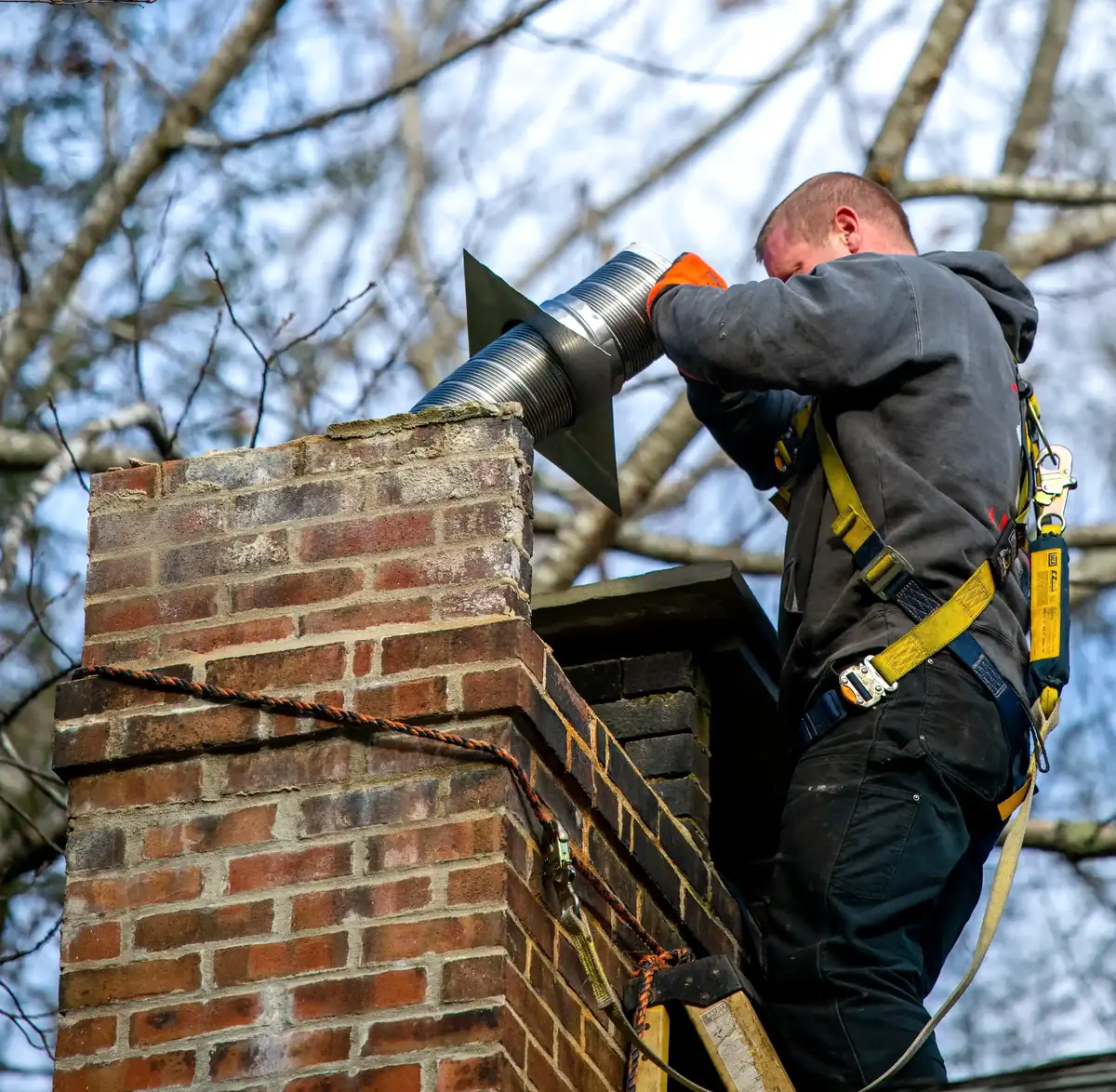
A chimney sweep can inspect the chimney and identify whether the right next step is no liner work, a repair, or installation. Our chimney liner installation service covers liner installation, and chimney liner work starts from $899. For details on pricing factors, see how much chimney liner installation costs.
Need help now? (240) 433-5089
How Can You Arrange a Chimney Liner Assessment?
When you book, share the appliance type and fuel, the symptoms you noticed, and any recent changes or damage. Having the appliance manual or past inspection report ready helps the chimney professional understand what needs to be assessed.
Maryland Chimney Service is open 24 hours a day, 7 days a week, and same-day service is available. To arrange an assessment, contact us or call (240) 433-5089.
Frequently asked questions
Can I use my fireplace if the chimney has no liner?
Do not assume it is safe to use without an inspection. The appliance and chimney design determine whether a liner is required, and a professional should check the flue before you light a fire.
Can a damaged chimney liner be repaired instead of replaced?
Sometimes, but the damage and liner type determine whether repair is suitable. An inspection should establish how extensive the damage is before you decide between repair and replacement.
Does changing my fireplace or heating appliance mean I need a new liner?
It can, because a new appliance may have different venting requirements from the one it replaced. Have the chimney and appliance evaluated together before using the new equipment.
What should I ask before approving chimney liner installation?
Ask what the inspection found, why the proposed liner fits your appliance, and what the installation work includes. Also ask what will be checked after installation and keep the findings with your appliance records.
Get Your Chimney Liner Checked
Share what you’ve noticed and arrange an assessment with Maryland Chimney Service at (240) 433-5089.