
Are Chimney Caps Required?
Are chimney caps required? Not in every situation; requirements depend on the appliance, chimney design, manufacturer instructions and applicable local code. A properly fitted cap can help keep rain, leaves and animals out of the flue.
Need help now? (240) 433-5089
Are Chimney Caps Required on Every Chimney?
There is no single answer for every chimney. Whether a cap is required can depend on the appliance and chimney type, the manufacturer’s installation instructions and the rules that apply to your property. Check the appliance or chimney documentation, then ask your local building department or a chimney professional to verify requirements for your setup.
Even when a cap is not specifically required, it can serve a practical purpose by covering the flue opening. Rain, leaves and animals can enter an uncapped chimney, and water getting inside may contribute to staining or damage. The right cap must fit the flue and leave the venting path unobstructed.
What a Chimney Cap Can Keep Out
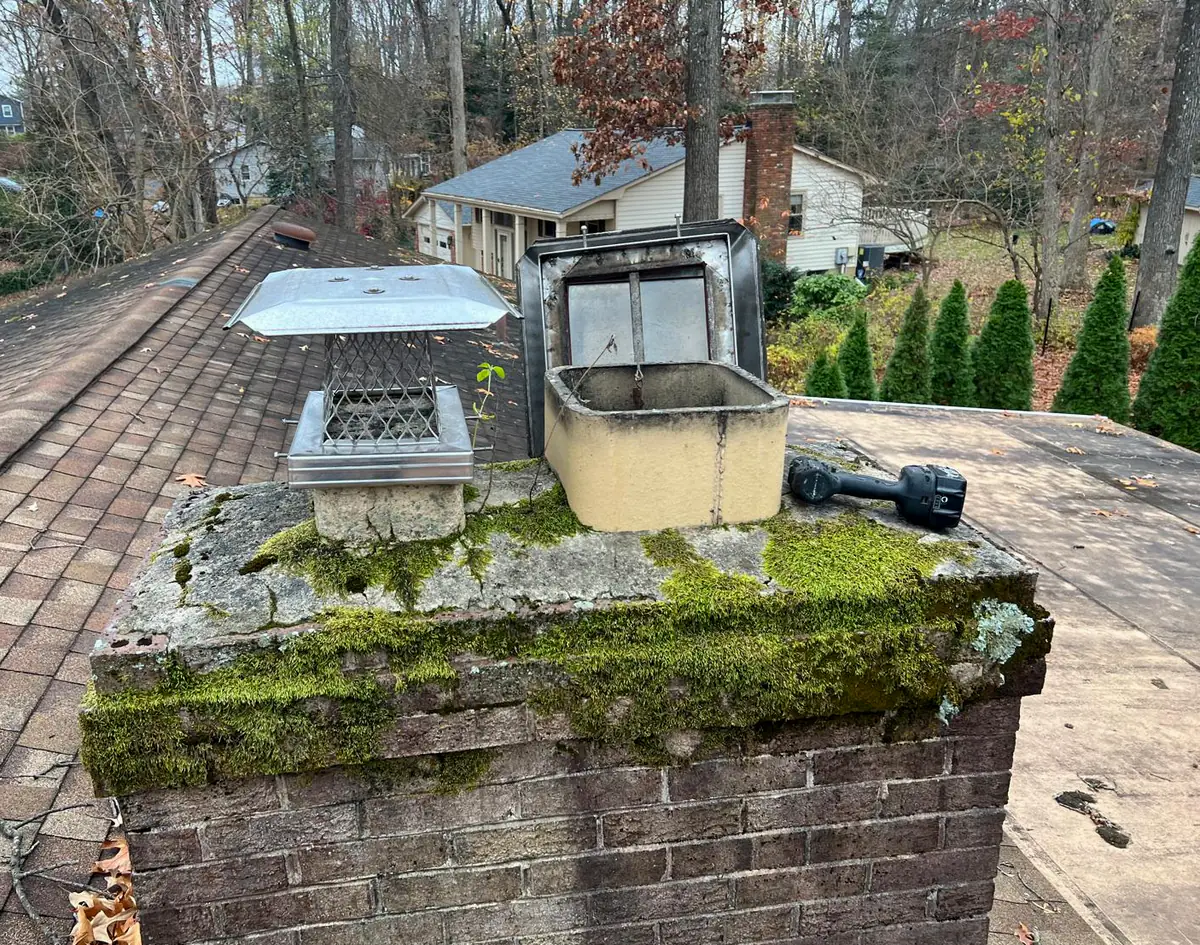
A cap sits at the top of the chimney and covers the flue opening. Its design matters: it needs to protect the opening without interfering with the chimney’s draft or the appliance’s venting.
- Rain and moisture — A cover sheds rain away from the flue opening. If you notice dampness, staining or musty odors near a fireplace, have the source checked rather than assuming a cap alone will fix it.
- Leaves and loose debris — A cover can reduce the amount of windblown material that enters the flue. Debris already inside still needs to be removed and the passage checked.
- Birds and other animals — A cap with a suitable screen can help keep animals out. Scratching, chirping or nesting material calls for an inspection; do not reach into the flue to remove an animal or nest.
- Sparks, with the right design — Some chimney caps include mesh intended to catch escaping sparks. The cap must still match the fireplace or appliance and stay clear enough for exhaust to pass.
Which Chimney Cap Fits Your Flue?
The right option depends on the chimney’s top, the number and arrangement of flues, and the appliance venting through it. A cap that covers the wrong area or blocks a vent can create a problem instead of solving one.
Single-flue cap
This covers one flue opening. It may suit a chimney with one exposed flue, provided the measurements and attachment method match the chimney.
Multi-flue cap
This covers several flue openings beneath one larger cover. The installer needs to account for each opening so the cover protects the top without obstructing any flue.
Specialty or appliance-specific cap
Factory-built chimneys and some appliance vents may need a cap designed for that system. Use the manufacturer’s specifications rather than choosing a generic cover based only on appearance.
Screened cap
A screened design can help keep animals and larger debris out. The screen needs to remain in good condition and clear of buildup so it does not restrict exhaust.
Need help now? (240) 433-5089
How to Check for a Missing or Damaged Chimney Cap Safely
Keep the check at ground level. Do not climb onto the roof, lean out of an upper window or put a tool into the flue; use what you can see and hear to decide whether to arrange an inspection.
- Let the fireplace or appliance cool — Do not check around an active fire or hot vent. Wait until the system is completely cool before looking inside from the room.
- Look at the chimney from the ground — Use binoculars if you have them. Check whether a cap appears to be present, tilted or visibly damaged, but do not treat a distant view as proof that its fasteners or screen are sound.
- Note what you see indoors — Look for water marks near the fireplace, loose material in the firebox or debris on the hearth. These signs can have more than one cause, so record their location and when you noticed them.
- Listen for animal activity — Scratching, calls or movement in the chimney can mean an animal has entered. Keep the fireplace unused and do not try to smoke the animal out or pull nesting material through the opening.
- Identify the appliance and flue — Write down whether the chimney serves a wood-burning fireplace, stove or gas appliance, and gather any manual or model information you have. The cap must be compatible with the venting system.
- Check the instructions you already have — Review the appliance or chimney manufacturer’s manual for cap requirements and approved parts. Do not substitute a cover that conflicts with those instructions.
- Arrange a professional check when needed — A missing, loose or damaged cap, signs of water entry, or suspected animal access are reasons to have the chimney examined. A chimney sweep can inspect the top and verify that the cap fits and the flue remains clear.
When a Chimney Cap Problem Needs a Chimney Sweep
Arrange a professional inspection when the cap is missing, visibly displaced or corroded, or when you find animal debris or water around the fireplace. A cap issue may be one part of a larger problem: the chimney crown, flashing, masonry or flue may also need attention.
Do not use the fireplace if an animal may be inside, the flue appears blocked, or you cannot tell whether exhaust can pass freely. We can inspect the chimney and recommend chimney cap installation service when a replacement or new cap is appropriate. For buildup or a blocked passage, arrange a chimney sweep in Silver Spring rather than trying to clear it from inside.
What Chimney Cap Installation Covers
A proper installation starts by checking the chimney top, flue arrangement and appliance or vent type. The cap is then selected and fitted for that opening, secured in place, and checked for clearance so the cover does not obstruct exhaust. If the top is damaged or the flue has a separate problem, that condition needs attention too.
Maryland Chimney Service installs chimney caps from $250. The price for a particular job depends on the work needed; see how much chimney cap installation costs for more detail. We provide same-day service, and you can contact us to arrange a visit.
Need help now? (240) 433-5089
What to Do Before You Choose a Chimney Cap
Do not buy a cap based on a rough visual guess or install one from the roof yourself. Share the appliance type, the number of flue openings and any signs of water or animal entry when you arrange service; these details help focus the inspection on fit and function.
If you are unsure whether your chimney needs a cap, ask for the top and flue to be checked before selecting a part. We serve Maryland from our Silver Spring base and can inspect the chimney and install a compatible cap when needed.
Frequently asked questions
Do chimneys need caps if the fireplace is not used?
An unused fireplace can still have an open route for rain, leaves or animals to enter through the flue. Check the chimney and appliance instructions before fitting a cap, since the correct cover depends on the venting system.
Can I install a chimney cap myself?
Installing a cap usually means working at the roof edge, so do not climb up to measure or fit one yourself. A chimney professional can check the flue openings, choose a compatible cap and secure it without blocking the vent.
Can a chimney cap stop a leak around my fireplace?
A cap can keep rain from falling directly into an open flue, but water can also enter through damaged flashing, a crown or masonry. Have the leak source identified before treating a cap as the complete repair.
What should I do if I hear an animal in my chimney?
Stop using the fireplace and do not reach into the flue, light a fire or try to drive the animal out. Arrange a professional inspection so the animal and any nesting material can be addressed safely and the chimney can be checked afterward.
Arrange a Chimney Cap Check
Call Maryland Chimney Service at (240) 433-5089 to arrange chimney cap inspection or installation. Same-day service is available.